How do I get ChatGPT to recommend my business?
ChatGPT recommends businesses based on sources it trusts. What OpenAI itself says, what we measured and which steps work for your SME


Summary
- ChatGPT recommends based on sources you can influence: reviews, third-party listicles, LinkedIn and editorial media. OpenAI itself says placement is not guaranteed
- In our own ChatGPT tracker (50 Belgian questions), the share of answers naming ClickForest rose from an average of 9.6% in early July to 21 of the 50 on 3 October 2026
- Listicles take 21.9% of all AI citations, and 40.9% for commercial questions (Wix Studio, over 1 million citations)
- The major AI crawlers do not execute JavaScript, except Gemini via Googlebot and AppleBot (Vercel); whatever only appears after JavaScript risks staying invisible
- llms.txt does not help: 97% of those files received not a single request in May 2026 (Ahrefs), and Google says Search does not use them
- AI visitors who click through convert better: +54% in US retail (Adobe) and 4.4 times more value per visitor in Semrush's niche
ChatGPT recommends a business when three things line up: it finds your page through its own search crawler and search partners, it sees your name in sources it trusts, such as reviews, third-party listicles, LinkedIn and editorial media, and your page answers the question in plain HTML. OpenAI itself adds that a place in the answers is not guaranteed.
That is good news, because you can influence those sources. In this article we explain where ChatGPT, Perplexity and Google AI Overviews get their recommendations, how to measure where your business stands today and which steps you can take yourself. We also show our own measurement: in a fixed set of 50 Belgian questions, ChatGPT now names ClickForest in 21 answers, compared with an average of 1 in 10 in early July. Everything was checked on 3 October 2026.
Where does ChatGPT get its recommendations?
From two layers: the knowledge inside the model itself and, for current or commercial questions, live search results. ChatGPT fetches those through its OAI-SearchBot crawler and through search partners such as Microsoft and Shopify. Along the way, it often rewrites your question into one or more narrower searches. According to OpenAI, a mix of factors counts, and placement is not guaranteed.
OpenAI puts it like this in its help page on search: “ChatGPT ranks search results using multiple factors intended to help users find relevant, reliable information. Placement is not guaranteed.” For local questions, ChatGPT can use an approximate location based on your IP address. For an SME in Mechelen or Antwerp, what can be found about you locally therefore counts too.
For webshops, OpenAI is more specific. Its explanation of shopping in ChatGPT states that product results “are not ads”, and that merchants are ranked “based on factors like availability, price, quality, and whether they are the maker or primary seller of that item”.
In March 2026, Peec AI mapped which sources ChatGPT tends to use, based on 30 million cited sources in the United States. Reddit, YouTube, LinkedIn, Wikipedia, Forbes, G2, Yelp, Facebook, Medium and TechRadar make up the top ten across the major AI platforms (Peec AI). ChatGPT leans on editorial sources such as Forbes and TechRadar, and Wikipedia scores strongly in ChatGPT and Perplexity. Google AI Overviews and AI Mode draw more often on social content such as Facebook and Yelp.
Those rankings are a snapshot. Semrush analysed 230,000 prompts and over 100 million citations and saw Reddit drop from around 60% of ChatGPT answers to around 10% between early August and mid-September 2025 (Semrush). The reason has not been established.
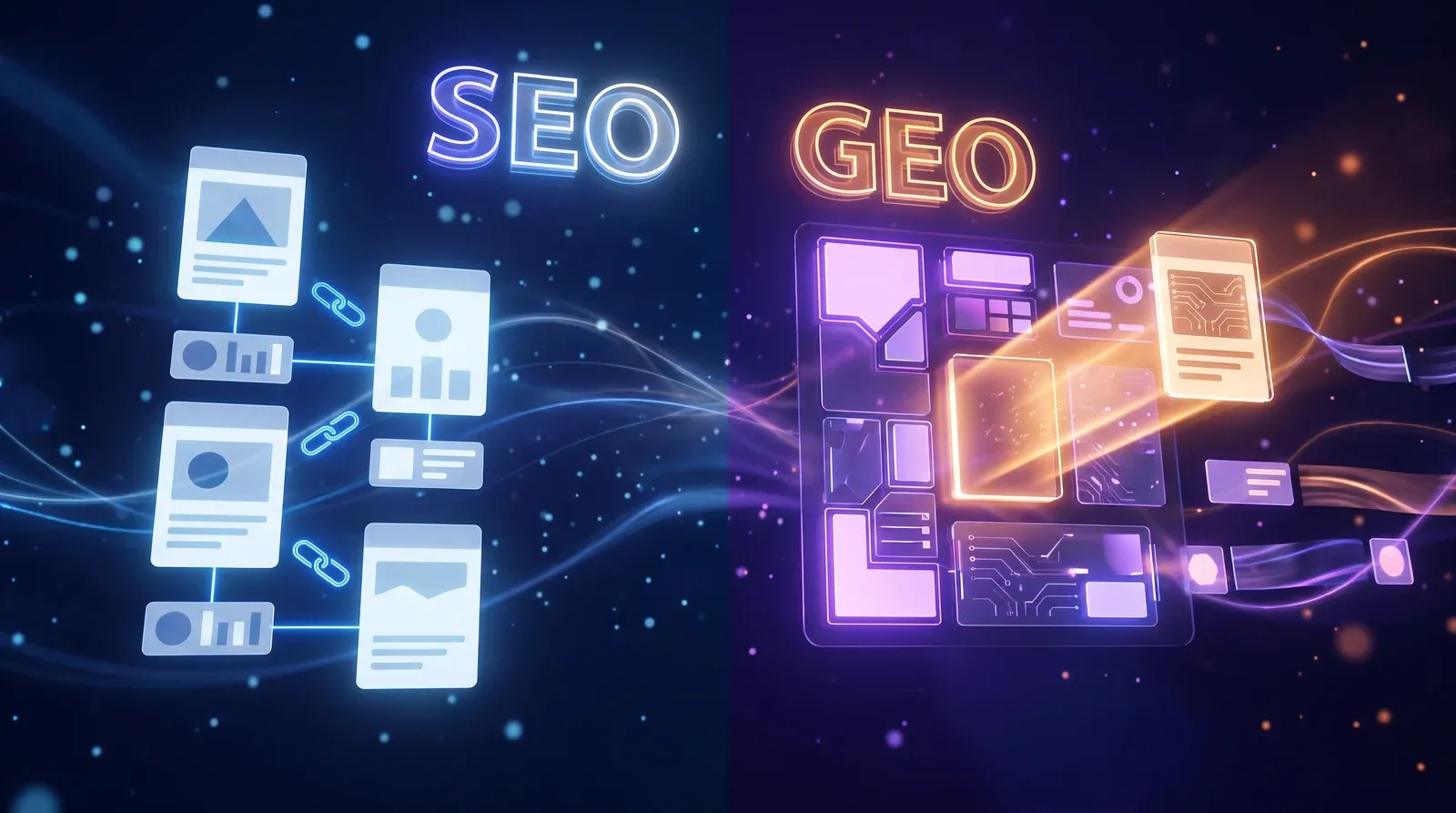
This discipline is called GEO, Generative Engine Optimization. ClickForest delivers GEO for Flemish SMEs in Mechelen and Antwerp as an extension of SEO. For how GEO grew out of SEO, see GEO marketing: the evolution of SEO.
Why is your business not found in AI search engines?
Almost always for one of three reasons: your business does not appear in the external sources AI systems rely on, your website does not answer the customer’s question literally enough to serve as a source, or a technical barrier keeps AI crawlers out. If ChatGPT recommends your competitor and not you, the first reason is usually the cause.
We see this in the tracker ClickForest runs every day as well. For agency questions, ChatGPT names concrete companies, fed by listicles, partner directories, reviews and the agencies’ own sites. Asked for a good Shopify developer in the Mechelen region on 3 October 2026, ChatGPT named five companies, with ClickForest first. It took the starting price in that answer word for word from our service page.
A source link is not the same as a mention. Semrush and Kevin Indig counted nearly 4,000 domain appearances across 115 prompts in 14 countries, and 61.7% of them were ghost citations: your page appears as a source link under the answer, but your brand name is nowhere in the text. When a brand turns up in a ChatGPT answer, it appears as a source link 87% of the time, yet it is named in the text only 20.7% of the time (Semrush). This is what that looks like in practice: for a question about a GEO audit, our English page on the GEO audit was the second source under the answer, while the name ClickForest did not appear in the text. The countermove is simple: write your brand name in the same paragraph as the fact you want to make citable.
Run a webshop? Then also read how your webshop stays findable now that AI agents shop along.
How do you measure whether ChatGPT names your business today?
With a fixed list of 20 to 50 questions phrased the way your customers ask them, which you repeat daily or weekly in ChatGPT and Perplexity. Note which companies and sources come back. Also check GA4 for visitors via chatgpt.com and perplexity.ai, and the new generative AI report in Search Console for your impressions in AI Overviews and AI Mode.
A single test says little: AI answers vary by day and by phrasing, even for businesses that hold a strong position. That Search Console report has been available for all websites since 31 August 2026 and shows per URL how often you appeared in AI Overviews and AI Mode (Google). It does not show the queries themselves.
ClickForest has been measuring this way itself since the summer. In SE Ranking’s ChatGPT tracker we follow 50 Belgian questions in Dutch, every day. This is how the share of answers that name ClickForest, and that list clickforest.com as a source link, evolved:
| Period | ClickForest named (average) | clickforest.com as a source (average) |
|---|---|---|
| 1 to 15 July 2026 | 9.6% | 12.0% |
| 16 to 31 July | 12.3% | 18.0% |
| 1 to 15 August | 16.7% | 24.3% |
| 16 to 31 August | 31.0% | 38.3% |
| 1 to 15 September | 44.9% | 54.0% |
| 16 to 30 September | 40.1% | 49.7% |
| 1 to 3 October | 44.0% | 58.7% |
| 3 October 2026, latest measurement | 21 of the 50 (42%) | 31 of the 50 (62%) |
Read those figures with due caution. They come from one tracker, one engine, one language and 50 fixed questions. At the end of July we swapped eight questions and on 28 September one more, and the jump around 25 August does not coincide with anything we published: we don’t know the cause. Measurements are missing for 26 and 27 August, and the lower second half of September is partly down to one failed measurement day on 21 September. In the same period we did take the steps in this article: a trilingual glossary, rewritten service pages with the answer at the top, agency overviews with our own criteria and a study of 200 Belgian websites. That is correlation, not proof of cause.
For a quick start, there is ClickForest’s SEO-GEO scan (available in Dutch and French): it checks ten SEO and ten GEO points on your website, from structured data to question headings. If you want to know what AI engines say about your brand today and which sources feed those answers, a GEO audit is the more thorough route.
Which content do AI search engines cite most?
Comparative and evaluative content. Listicles account for 21.9% of all AI citations, more than regular articles (16.7%) and product pages (13.7%). For commercial questions, the share of listicles rises to 40.9%. For questions about brands, 57% of citations go to reviews, listicles, forums, social media and case studies.
The figures come from two large analyses. Wix Studio examined 75,000 AI answers with over 1 million citations from ChatGPT, Google AI Mode and Perplexity (Wix Studio). Omniscient Digital scrutinised 23,387 unique sources for brand-related questions and saw a mere 5.4% go to educational content and thought leadership (Omniscient Digital). Wix adds its own nuance: the intent of the question predicts the format better than the sector or the model does. Both studies are American or English-language, so read the percentages as a direction.
Freshness counts too. Ahrefs analysed almost 17 million cited URLs: AI assistants cite content that is on average 25.7% fresher than classic search results, and ChatGPT picks pages that are on average 458 days newer (Ahrefs). The average cited page is still 2.9 years old, though. Write evergreen, and maintain your best pages with real updates.
Since May 2026, Google has had its own guide to generative AI in Search as well. It states that unique, compelling and helpful content is likely to have more long-term influence on your presence in AI search features than any other tip in that guide. We explain how to build such a page in GEO strategies: become the source for generative AI.
How important are mentions outside your own website?
For recommendation questions, more important than your own site. Reviews, third-party listicles and LinkedIn carry a lot of weight, and across 75,000 brands Ahrefs found that web mentions correlate more strongly with visibility in AI Overviews (0.664) than backlinks do (0.218). Google does warn that contrived mentions help less than you might think.
That correlation comes from research by Ahrefs, which itself points out that correlation does not prove causation. For professional and B2B questions, LinkedIn is now the most-cited domain across six AI platforms. Profound analysed 1.4 million citations between November 2025 and February 2026 for this, and saw LinkedIn climb in ChatGPT from roughly position eleven to position five (Profound). For how to tackle that channel, read LinkedIn marketing for B2B leads.
In professional services, 80.9% of the cited listicles in the Wix research came from third parties, within the 1,000 most-cited URLs. Google draws the line in its guide: “Seeking inauthentic ‘mentions’ across the web isn’t as helpful as it might seem.” Since 24 July 2026, Google’s documentation on review snippets has also included a rule against fake reviews and undisclosed incentivised reviews. For an SME in Flanders, that means: ask satisfied customers for a Google review, keep your Google Business Profile complete, get listed in the relevant sector directories and work on case studies that others can cite. Google itself names Business Profile and Merchant Center as ways to become visible in AI answers. ClickForest helps Flemish SMEs in Mechelen and Antwerp build out that external layer.
What has to be technically right for AI crawlers?
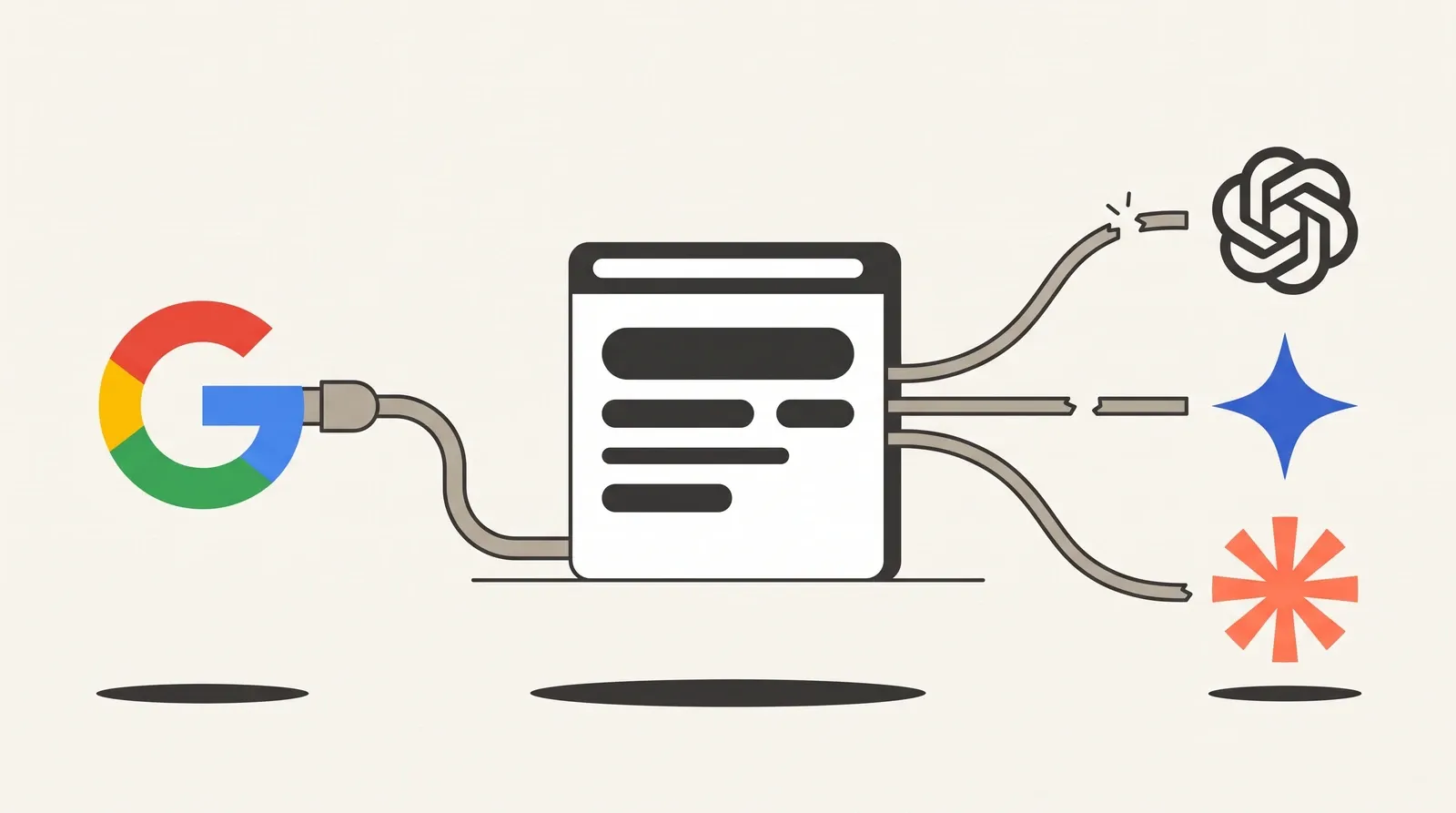
Two things: your core content must sit in the raw HTML, and the right crawlers must be allowed in. According to a measurement by Vercel, the major AI crawlers do not execute JavaScript, with the exception of Gemini via Googlebot’s infrastructure and AppleBot. If you block OAI-SearchBot, OpenAI says you will not appear in ChatGPT’s search answers.
The JavaScript finding comes from a measurement by Vercel and MERJ at the end of 2024, based on, among other things, 569 million GPTBot requests in one month on Vercel’s network: AI crawlers do fetch JavaScript files, but they do not execute them (Vercel). We found no newer public measurement that contradicts this. If your price table, FAQ or service description only appears on the page after JavaScript, you risk ChatGPT and Perplexity not seeing it.
Which crawler does what differs per engine. This is the current state according to the makers’ own documentation:
| Engine | Crawler you need to allow | What it does | Executes JavaScript (Vercel, end of 2024) |
|---|---|---|---|
| ChatGPT | OAI-SearchBot | Determines whether you appear in ChatGPT's search answers. GPTBot is the training crawler and is separate from it | No |
| Perplexity | PerplexityBot | Surfaces and links websites in Perplexity's search results, not used for training | No |
| Claude | Claude-SearchBot and Claude-User | Search quality and fetching at a user's request. ClaudeBot is the training crawler | ClaudeBot: no. Claude-SearchBot and Claude-User have not been measured |
| Google AI Overviews, AI Mode and Gemini | Googlebot | The same index as Google Search: only indexed pages with a snippet are eligible | Yes |
OpenAI is explicit in its documentation on bots: OAI-SearchBot “is used to surface websites in search results in ChatGPT’s search features”, and you can allow OAI-SearchBot while blocking GPTBot. According to OpenAI, a site that refuses OAI-SearchBot will not appear in the search answers, although it may still show up as a navigational link. So check your robots.txt, and your firewall or CDN as well: OpenAI asks site owners to allow traffic from its published IP addresses. For Claude, Anthropic names ClaudeBot as the crawler for training, and Claude-SearchBot and Claude-User as the crawlers for search and for user requests (Anthropic).
Search Console also has a new “Search generative AI” setting that lets you exclude your site from generative AI in Google Search. By default it is set to include (Google). Structured data remains hygiene: Google says generative AI does not require it, and recommends you keep using it as part of your SEO. Setting it up is explained in the structured data guide and the JSON-LD implementation guide. The classic SEO foundation remains the bedrock.
For DTC brands, Catalog provides a product data layer for AI commerce. It connects to an existing catalog, fills missing attributes, and turns product information into structured, machine-readable data that can be distributed across AI shopping surfaces. Continuous synchronization keeps prices, inventory, and variants current, while the merchant’s site and checkout remain in place.
Do you need an llms.txt to be findable?
No. Ahrefs looked at 137,000 domains: of the roughly 38,000 sites with a valid llms.txt, 97% received not a single request for it in May 2026, from anyone at all (Ahrefs). Google says in its guide that Search does not use such files. An llms.txt does no harm for other services; it is simply the last thing you do.
Adoption did grow by a factor of 8.8 in the meantime, from over 4,000 sites in June 2025 to over 36,000 in May 2026, according to tracking by Originality.ai (PPC Land). Google puts it bluntly: “You don’t need to create new machine readable files, AI text files, markup, or Markdown to appear in Google Search (including its generative AI capabilities), as Google Search itself doesn’t use them.” In the same guide, Google strikes out more popular tips: chopping content into chunks for AI, rewriting content specifically for AI and collecting contrived mentions.
“AFAIK none of the AI services have said they’re using LLMs.TXT (and you can tell when you look at your server logs that they don’t even check for it). To me, it’s comparable to the keywords meta tag (…)”
— John Mueller, Search Advocate at Google, April 2025 (via Search Engine Journal)
Put the time you would spend on this into content that answers customer questions and into external mentions.
Does optimising for Perplexity and AI Overviews differ from ChatGPT?
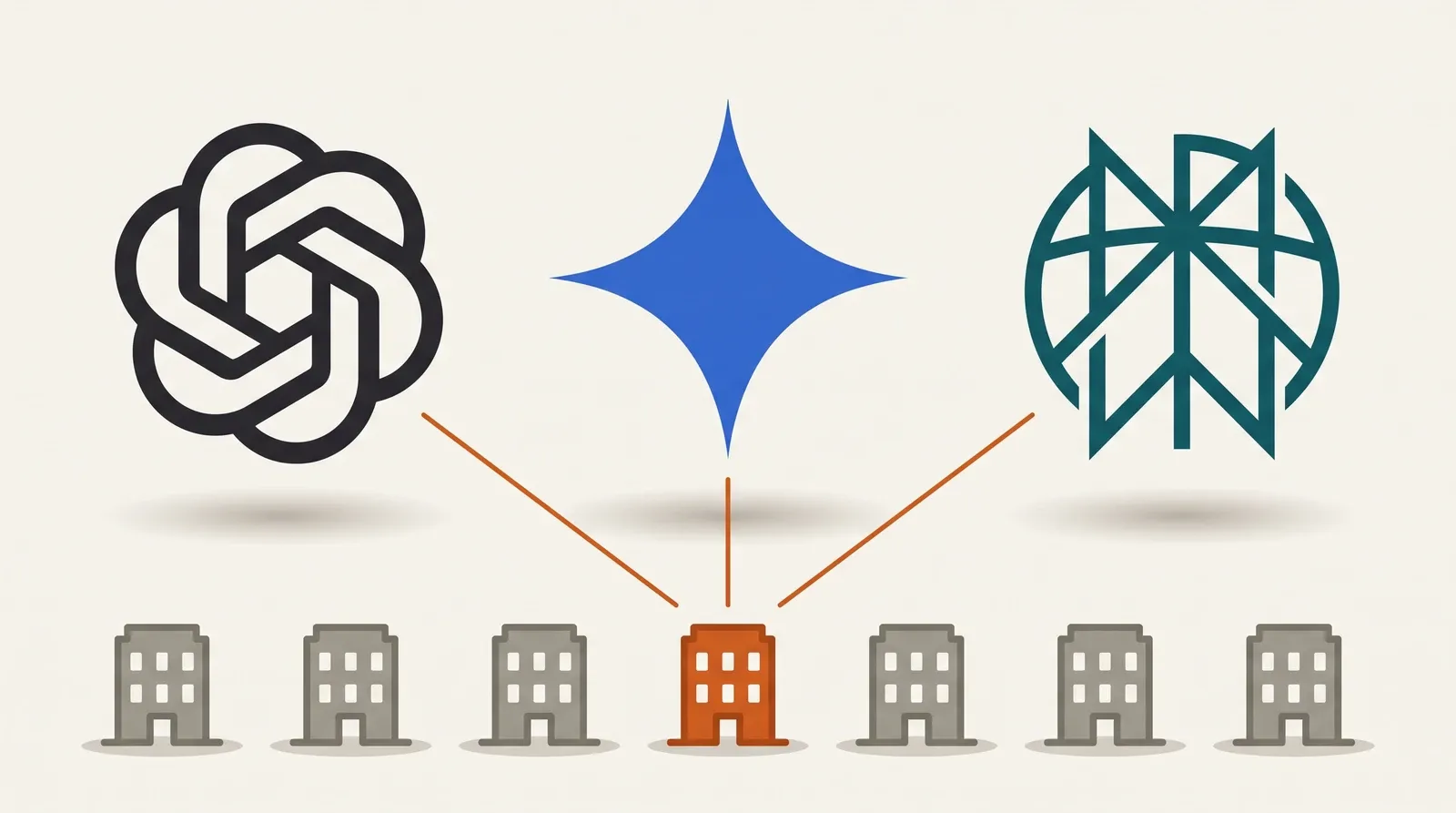
The foundation is the same, the accents differ. According to Statcounter, ChatGPT held 80.48% of the AI chatbot market in September 2026, ahead of Gemini (10.91%), Perplexity (5.85%), Copilot (1.79%) and Claude (0.95%). Which brands an engine cites varies widely: what ChatGPT cites and what Gemini names barely overlap. So measure per engine.
Those market figures come from Statcounter. In Semrush’s ghost citation study, Kevin Indig summed up the difference between the engines like this:
“There’s almost no overlap between which brands ChatGPT cites and which ones Gemini names for the same prompt. These are different behavioral systems. Treat them that way.”
— Kevin Indig, Growth Advisor (Growth Memo), in the Semrush study, June 2026 (Semrush)
Google AI Overviews grew in Belgium too. Based on over 8 million keywords, Online Marketing Monkey saw them rise from 3.37% in May 2025, through a peak of 14.53% in August, to 12.21% in November 2025 (Online Marketing Monkey). In May 2025, the 70 Belgian sites studied were cited as a source in 2.43% of those AI overviews, and in November in 1.98% (Online Marketing Monkey). More AI overviews, and a smaller share for those 70 Belgian sites.
Your customers are already there: according to imec.digimeter, 43% of people in Flanders used generative AI at least monthly in 2025, compared with 28% in 2024 and 18% in 2023 (imec). Why every AI mention weighs more as fewer people click through is explained in the importance of zero-click.
What does a mention in ChatGPT concretely deliver?
Less volume than Google, but visitors with more purchase intent. AI traffic to US retail sites converted 54% better than other traffic in May 2026 and grew 138% year on year. Semrush calculated that, within its own marketing niche, a visitor from AI search is worth 4.4 times as much in conversions as a classic organic visitor.
The retail figures come from Adobe Analytics data covering more than a trillion visits to US retail sites: AI traffic has grown 1,324% since October 2024, and visitors via AI stay 53% longer and view 23% more pages (Digital Commerce 360). The Semrush figure applies to its own niche and cannot simply be carried over to every sector (Semrush).
You prove that a recommendation in ChatGPT leads to sales with three sources together: visits via chatgpt.com and perplexity.ai in GA4, your impressions in the AI report in Search Console, and asking every new customer how they found you. That last one catches what the tools miss, because a recommendation without a click shows up nowhere.
“I would argue that, generally, traffic—unless you’re a publisher who monetizes through advertising—is a vanity metric.”
— Rand Fishkin, cofounder and CEO of SparkToro (Advanced Web Ranking)
That is why, in GEO projects, ClickForest steers on mentions for the right questions and on the quality of the leads they bring in.
Conclusion: measure first, then build
This is how we approach it, in this order:
- Measure your current AI visibility. Work with 20 to 50 fixed questions in your customers’ words, repeat them regularly in ChatGPT and Perplexity, and track GA4 and the AI report in Search Console.
- Let the right crawlers in. OAI-SearchBot, PerplexityBot, Claude-SearchBot, Claude-User and Googlebot, in your robots.txt and in your firewall or CDN.
- Put your core content in the raw HTML. Prices, services and FAQ should not appear only after JavaScript.
- Answer your customers’ literal questions. One question per page, the answer at the top, your own experience and figures with a source, and your brand name in the same paragraph as the citable fact.
- Build the external layer. Genuine Google reviews, a complete Google Business Profile, sector directories, third-party listicles, case studies and a consistent LinkedIn presence.
- Refresh your best pages. AI cites fresher content, and the source mix keeps shifting.
“Play the long game. Sit back and see how things shake out before making dramatic changes (…)”
— Lily Ray, founder of Algorythmic and VP SEO Strategy & Research at Amsive (BuzzStream)
So be wary of anyone who promises you guaranteed positions in ChatGPT. To test an agency on that point, use the overview of GEO agencies in Belgium, checked on 7 August 2026. How often the technical signals are missing in practice is shown in our study of 200 Belgian websites: 96% fall short on the Organization schema and 98% have no Person schema. ClickForest delivers GEO for Flemish SMEs in Mechelen, Antwerp and the rest of Flanders, always starting from a measurement. Explore the GEO approach or get in touch if you want to know where your business stands in ChatGPT today.

Your brand visible in ChatGPT, Perplexity and other AI search engines
Want to know if your brand gets mentioned when people search with AI tools? Explore the GEO approach
Discuss your challenge directly with Frederiek: Book a free strategy call or send us a message
Prefer email? Send your question to frederiek@clickforest.com or call +32 473 84 66 27
Strategy without action remains theory. Let's take your next step together.
Frequently asked questions
GEO is the practice of optimising your website and your external mentions so that AI systems such as ChatGPT, Perplexity and Google AI Overviews use and recommend your business as a source. Google itself still calls it SEO. ClickForest delivers GEO for Flemish SMEs in Mechelen and Antwerp, as an extension of SEO.
No. AI search features rely on the same fundamentals as search engines: clear content, authority and technical accessibility. In its own guide, Google writes that optimising for generative AI is 'still SEO'. GEO adds citability, external mentions and access for AI crawlers.
Think in months. In ClickForest's own tracker, the share of answers naming ClickForest rose from an average of 1 in 10 to 21 of the 50 questions between early July and early October 2026; that is a correlation, and the cause has not been established. ChatGPT does fetch live web results, so pages that answer the literal customer question can surface sooner.
Yes. The foundation works on every engine: answering literal questions, building external mentions and serving your content in plain HTML. The accents differ: AI Overviews and AI Mode draw more often on social content, ChatGPT more on editorial sources. Which brands they name varies widely, so measure per engine.
Not in the answers themselves. OpenAI says product results in ChatGPT are not ads and that placement is not guaranteed. OpenAI started testing ads separately in the United States in February 2026, apart from how the answers are put together. A paid recommendation inside the answer therefore does not exist.
A tracker that puts fixed questions to ChatGPT every day, such as the AI tracker from SE Ranking that ClickForest uses itself. Supplement it with GA4 for visits via chatgpt.com and with the AI report in Search Console for Google. A single test says little, because answers vary by day and by phrasing.
Measure your current AI visibility first: ask your customers' questions to ChatGPT and Perplexity yourself and note which sources recur. ClickForest delivers GEO for Flemish SMEs in Mechelen and Antwerp and does so with a daily AI tracker and a GEO audit, to determine where the biggest gains are.
Sources and references
What OpenAI, Google and Anthropic say themselves:
- OpenAI: "Searching the web with ChatGPT" (help center) · https://help.openai.com/en/articles/9237897-chatgpt-search
- OpenAI: "Shopping with ChatGPT search" (help center) · https://help.openai.com/en/articles/11128490-shopping-with-chatgpt-search
- OpenAI: Bots (developer documentation) · https://developers.openai.com/api/docs/bots
- Google Search Central: "Optimizing your website for generative AI features" (May 2026) · https://developers.google.com/search/docs/fundamentals/ai-optimization-guide
- Google Search Central: AI features (documentation) · https://developers.google.com/search/docs/appearance/ai-features
- Search Console Help: generative AI report (August 2026) · https://support.google.com/webmasters/answer/16984139
- Search Console Help: "Search generative AI" setting · https://support.google.com/webmasters/answer/16908024
- Anthropic: Anthropic's crawlers and how to block them · https://support.claude.com/en/articles/8896518-does-anthropic-crawl-data-from-the-web-and-how-can-site-owners-block-the-crawler
Citation studies:
- Peec AI: "Top domains cited by AI search: Analysis based on 30M sources" (March 2026) · https://peec.ai/blog/top-domains-cited-by-ai-search-analysis-based-on-30m-sources
- Semrush: "The Most-Cited Domains in AI: A 3-Month Study" (2025) · https://www.semrush.com/blog/most-cited-domains-ai/
- Semrush: "Why 62% of AI citations don't lead to brand mentions" (June 2026) · https://www.semrush.com/blog/the-ghost-citations-study/
- Profound: "LinkedIn is the most-cited domain for professional queries in AI search" (2026) · https://www.tryprofound.com/blog/linkedin-is-the-most-cited-domain-for-professional-queries-in-ai-search
- Wix Studio: "The content types most cited by LLMs" (2026) · https://www.wix.com/studio/ai-search-lab/research/content-types-most-cited-by-llms
- Omniscient Digital: "Which Content Types LLMs Cite Most" (2026) · https://beomniscient.com/blog/content-types-cited-in-llms/
- Ahrefs: brand mentions and visibility in AI Overviews (75,000 brands) · https://ahrefs.com/blog/ai-overview-brand-correlation/
Technical and AI crawlers:
- Vercel: "The rise of the AI crawler" (2024) · https://vercel.com/blog/the-rise-of-the-ai-crawler
- Ahrefs: "We Analyzed 137K Sites: 97% of llms.txt Files Never Get Read" (2026) · https://ahrefs.com/blog/llmstxt-study/
- Ahrefs: "AI Assistants Prefer to Cite Fresher Content" (2025) · https://ahrefs.com/blog/do-ai-assistants-prefer-to-cite-fresh-content/
- PPC Land: "llms.txt adoption rises 8.8x but 97% of files get zero AI requests" (2026) · https://ppc.land/llms-txt-adoption-rises-8-8x-but-97-of-files-get-zero-ai-requests/
Belgium and Flanders:
- Online Marketing Monkey: "Explosive growth of AI Overviews in Belgium" (2025) · https://www.onlinemarketingmonkey.be/blog/onderzoek-aio-in-belgie
- Online Marketing Monkey: "The evolution of Google AI Overviews in Belgium" (2025) · https://www.onlinemarketingmonkey.be/blog/onderzoek-de-evolutie-van-google-ai-overviews-in-belgie-nieuwe-mogelijkheden-voor-online-succes
- imec: "AI use makes an unprecedented leap to half of Flemish people" (2026) · https://www.imec.be/nl/press/ai-gebruik-maakt-ongeziene-sprong-tot-bij-helft-van-de-vlamingen
Impact and expert voices:
- Digital Commerce 360: "Adobe: AI-referred traffic to retail sites doubles in a year" (2026) · https://www.digitalcommerce360.com/2026/06/17/adobe-ai-referred-traffic-to-retail-sites-doubles-in-a-year/
- Semrush: "We Studied the Impact of AI Search on SEO Traffic" (2025) · https://www.semrush.com/blog/ai-search-seo-traffic-study/
- Statcounter: AI chatbot market share (September 2026) · https://gs.statcounter.com/ai-chatbot-market-share
- Search Engine Journal: "Google Says LLMs.txt Comparable To Keywords Meta Tag" (2025) · https://www.searchenginejournal.com/google-says-llms-txt-comparable-to-keywords-meta-tag/544804/
- BuzzStream: interview with Lily Ray (2026) · https://www.buzzstream.com/blog/lily-ray-podcast/
- Advanced Web Ranking: interview with Rand Fishkin (2025) · https://www.advancedwebranking.com/blog/branding-in-age-of-ai-zero-click-serps