The best AI marketing tools for marketers in 2026
Which AI marketing tools truly pay off in 2026? The picks per task, from content and visuals to SEO, ads and email, as used daily by a Belgian agency

Summary
- A stack per task is enough: one AI assistant as the base plus at most one specialised tool per marketing task (last checked: September 2026)
- AI assistants: ChatGPT (GPT-5.6, with GPT-6 Astra in the higher plans), Claude (Sonnet 5, Opus 5 and since 1 September Fable 5.1), Gemini (3.1 Pro and 3.8 Flash) and Perplexity with the free Comet browser
- Image and video: Nano Banana 2, Nano Banana Pro and Midjourney V8.2 for image, Gemini Omni Flash, Veo 3.1 and Runway Gen-4.5 for video; the Sora app stopped on 26 April 2026
- Ads already run on AI: according to Google more than 30% of its customers' Search spend runs through AI campaigns such as AI Max or Performance Max, and Meta's automated Advantage+ suite is at an annual run rate of over $75 billion
- Choose on task and proof: start with the free entry level, measure the time saved and only pay for what demonstrably delivers
A new AI tools listicle every week, a new “must-have” subscription every month: tool fatigue among marketers is real. So this guide takes a different approach from the thirty-tool round-up: we select per marketing task what genuinely pays off as of September 2026, based on the AI marketing tools we use daily at ClickForest for SMEs in Flanders. You get the best AI marketing tools per category (assistants, content, image and video, SEO and GEO, advertising, email and automation), an honest decision matrix, and the rule every listicle forgets: a tool without a way of working is a subscription without a return. Everything below was checked in September 2026, because this landscape changes monthly; the strategy behind the tools is in our AI marketing guide.
Which AI tools does a marketer really need?
A stack per task: one AI assistant as the base (covering writing, research and analysis), plus at most one specialised tool per recurring task, and the AI already inside your existing platforms (ads, email, webshop) used to the full. Choose this way and most SME marketing ends up at five to ten tools instead of thirty.
It comes down to focus, because the field moves fast. Sam Altman describes that pace like this:
“We are past the event horizon; the takeoff has started.”
— Sam Altman, CEO of OpenAI, in his essay “The Gentle Singularity”
That is exactly why trying every new tool does not pay: the supply refreshes faster than you can evaluate it. Choose per task, build a way of working, and only replace a tool when a new one is demonstrably better for that task.
Which AI assistant do you choose as your base?
Four names dominate as of September 2026: ChatGPT (GPT-5.6, and since 3 September GPT-6 Astra in the higher plans), Claude (Sonnet 5, Opus 5 and since 1 September Fable 5.1), Google Gemini (3.1 Pro and since 2 September 3.8 Flash) and Perplexity (with the free Comet AI browser as its research trump card). All four have a free entry level; the difference is in writing style, reasoning and integrations.
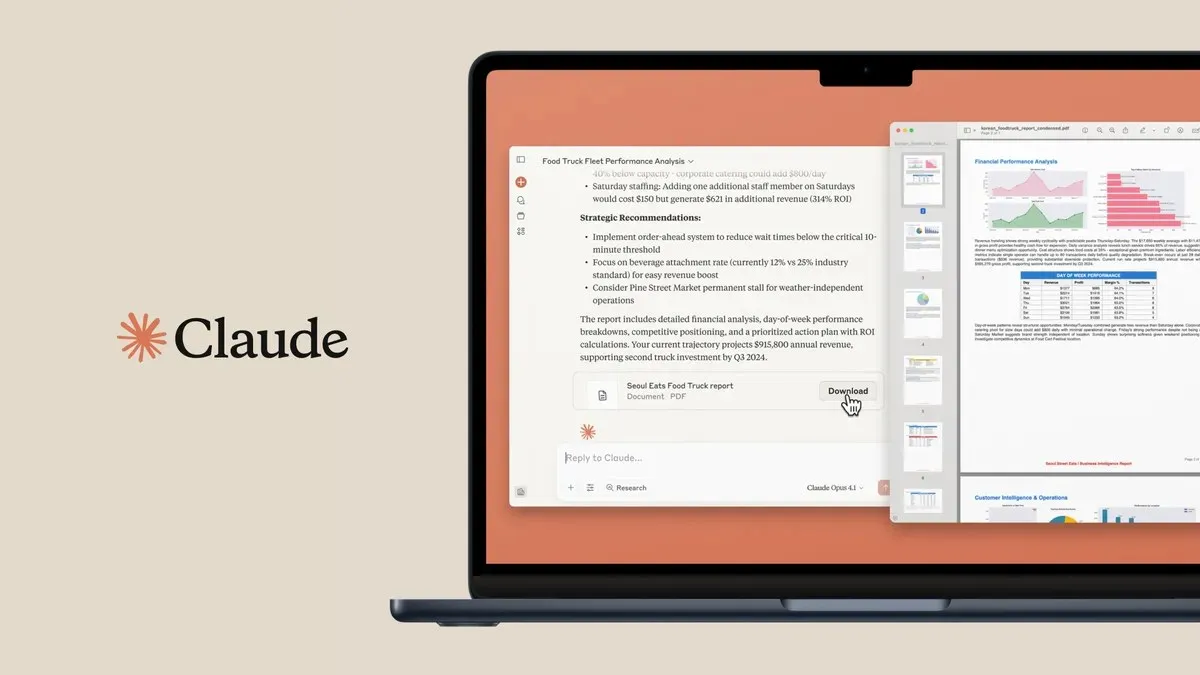
Claude can also work directly in your browser, through the Claude in Chrome extension.
Our rule of thumb: choose on your main task. Lots of writing in your own brand voice: Claude. Broadest ecosystem and integrations: ChatGPT or Gemini. Research with cited sources: Perplexity. The full comparison, with strengths and weaknesses per assistant, is kept up to date in ChatGPT vs Claude vs Perplexity: the practical comparison, the models themselves in our model comparison; for tasks beyond marketing, which AI tool for which task helps you further. More important than the choice: really learning to work with it, because better prompts make more difference than another model.
Which AI tools do you use for content and copy?
Your AI assistant is the core here; specialised writing tools are rarely needed any more. The way of working makes the difference: feed the assistant your tone of voice, product info and examples, let it write the first version, and guard facts and brand voice yourself. If you work on Shopify, Sidekick already gives you AI copy help within your Shopify plan.
The pitfall now officially has a name: “slop”, AI junk content, declared Merriam-Webster’s word of the year 2025. Their president on why:
“It’s such an illustrative word. It’s part of a transformative technology, AI, and it’s something that people have found fascinating, annoying and a little bit ridiculous.”
— Greg Barlow, president of Merriam-Webster
Translated to your content production: volume without quality control damages your brand and your findability. How we organise that professionally, from briefing to final edit, is covered by our content production with AI service.
Which AI tools do you use for image and video?
For image, Google’s Nano Banana family (Nano Banana 2 as the default, Pro for maximum precision and 2 Lite for speed) and Midjourney (V8.2) are the references; for video it is Gemini Omni Flash in the Gemini app, Google Veo 3.1 (native audio) and Runway Gen-4.5, with platforms like Higgsfield and invideo agent bundling multiple video models. Canva’s Magic Studio remains the low-threshold all-in-one for social formats.
Two topical notes many listicles miss: OpenAI’s Sora app stopped on 26 April 2026 and the Sora API follows on 24 September 2026, so don’t build anything on it any more; and the image models are now good enough for brand-consistent campaign and blog visuals, provided you check every render for spelling and details. We generate the heroes of this blog with Nano Banana Pro, for example, with a fixed style guide and a visual check per image: same principle as with text, AI produces, the human approves.
Which AI tools do you use for SEO and GEO?
In 2026 the SEO tool market has shifted from keywords to AI visibility: you want to know where you rank in Google and whether ChatGPT, Perplexity and Google’s AI answers mention you. SE Ranking built the AI Results Tracker and the standalone SE Visible for this; Surfer positions itself as an AI Visibility Platform with its own AI Tracker.
For an SME the order is: first your classic SEO foundation (rankings, tech, content), then measure AI visibility on top, because the two are connected. We use SE Ranking daily for both layers in our SEO programmes. How you use AI tools within your SEO work (research, content optimisation, internal links) is covered separately in combining SEO and AI.
Curious which stack fits your business? ClickForest selects and implements AI marketing tools for SMEs in Flanders, always starting from the task. See our AI services or book a no-obligation video call.
Which AI tools do you use for advertising?
Here you barely have to choose: the AI is already in the platforms themselves, and it has become mandatory. According to Google, more than 30% of its customers’ Search spend now runs through AI campaigns such as AI Max or Performance Max (first quarter of 2026); Meta’s CFO Susan Li reported on their automated advertising suite in July 2026:
“Our AI-powered Advantage Plus end-to-end solutions continue to grow, reaching over $75 billion in annual revenue run rate this quarter.”
— Susan Li, CFO of Meta, July 2026
The marketer’s task therefore shifts from bidding and targeting to feeding and guarding: good conversion data, strong creatives and passing on the right values. External AI tools mainly add value here for creative production (image and video, see above) and reporting. The full story of how AI changes the campaign side is in performance marketing in the AI era.
Which AI tools do you use for email and automation?
For e-commerce email, Klaviyo is the reference, and in 2026 it has emphatically become an AI product: among the K:AI agents, Composer builds campaigns and flows from a plain-language brief, in public beta since 30 June 2026, and Customer Agent supports customer contact. For broader automation, n8n (self-hostable, strong in AI workflows), Make (with AI assistant Maia) and Zapier (with Agents) connect thousands of apps to each other.
Our sequencing tip: only automate what you already do well manually. A sloppy email flow just gets sloppy faster with AI. Start with the proven flows (welcome, abandoned cart, follow-up) and let AI optimise afterwards; our guide to email marketing automation for e-commerce lays out that base, and for Shopify-specific automation there is AI apps and automation in Shopify.
Which AI tools does ClickForest use itself?
Full transparency: our core stack as of September 2026 is Claude (writing, analysis and agents, including Claude Code for technical work), Nano Banana Pro for image production, SE Ranking for SEO and AI visibility, GA4 plus Search Console for measurement, Klaviyo with e-commerce clients, and the built-in AI of Google and Meta for campaigns. Notion (with the External Agents from version 3.6) keeps the knowledge together.
More important than the names is what it feels like to work this way. Wharton professor Ethan Mollick describes the shift aptly:
“This is an era of managing AIs, rather than working with them.”
— Ethan Mollick, professor at the Wharton School
That is exactly our experience: the marketer becomes the director of a set of AI co-workers, and the quality of your briefings, checks and work rhythm determines the result.
How do you choose AI tools without drowning in the supply?
With a simple matrix per task: what is the entry level (often the free tier of your assistant or a built-in feature) and what is the professional choice once volume and requirements grow? This is what it looks like as of September 2026:
| Task | Entry level | Professional choice |
|---|---|---|
| Writing and research | Free tier of ChatGPT, Claude or Gemini | Paid subscription to one assistant + your own way of working |
| Image | Canva Magic Studio, Nano Banana | Nano Banana 2, Nano Banana Pro or Midjourney V8.2 with a style guide |
| Video | Built-in social tools | Gemini Omni Flash, Veo 3.1, Runway Gen-4.5 or a multi-model platform |
| SEO and GEO | Search Console + your current SEO tool | SE Ranking with AI Results Tracker or Surfer |
| Ads | Built-in AI of Google and Meta | Same, plus external creative production |
| AI features in your current email tool | Klaviyo with K:AI | |
| Automation | Zapier or Make for simple connections | n8n for custom AI workflows |
A few selection rules to finish: choose what your team will actually use, first check whether your existing software already has the feature, and re-evaluate your stack every quarter.
What should you remember about AI marketing tools?
The best AI marketing stack is small and purposeful: one assistant you master, at most one specialist per task, and maximum use of the AI already inside your platforms. The line-up (GPT-6 Astra, Claude Fable 5.1, Gemini 3.8 Flash, Nano Banana 2, K:AI) ages fast; your way of working, briefings and quality control last much longer. Keep that order and five to ten tools will do for most SMEs.
ClickForest helps SMEs in Flanders choose AI marketing tools and make them pay off, from strategy to implementation and automation. Curious what belongs in your stack? Book a no-obligation video call and we’ll look at your situation together.

Grow with AI, practically and without unnecessary complexity
Ready to use AI to save time and accelerate your marketing? Discover our AI services
Discuss your challenge directly with Frederiek: Book a free strategy call or send us a message
Prefer email? Send your question to frederiek@clickforest.com or call +32 473 84 66 27
Strategy without action remains theory. Let's take your next step together.
Frequently asked questions
A full AI assistant, because it immediately covers the broadest set of tasks: writing, research, analysis and brainstorming. Pick one and learn it thoroughly. Only after that do you add specialised tools for tasks where the assistant falls short, such as image production or email automation.
Most assistants and many specialised tools have a free entry level; paid subscriptions typically charge per month or per usage volume. The smart order: start free, measure whether the tool demonstrably saves you time or improves results, and only upgrade where that is proven. That way your tool cost grows with your return. ClickForest applies that same order to AI marketing tools for SMEs in Flanders.
Not for assistants, image tools and the AI features in your ad or email platform: those are built for non-technical users. Automation platforms and AI agents require more insight into processes and integrations. More important than technique is a good way of working: clear instructions, your own source material and a fixed quality check.
Better and better: automation platforms connect thousands of apps to each other, and more and more software has AI built in so you don't need to connect anything. Before choosing a new tool, check whether your current webshop, email or CRM software already has the feature on board; that saves you an integration and a subscription.
ClickForest uses AI marketing tools daily for SMEs in Flanders: AI assistants for content and analysis, image models for campaign and blog visuals, AI visibility tracking for SEO and GEO, and automation for reporting and follow-up. The selection shifts regularly, because the market changes monthly; the way of working around it remains the fixed foundation.
Sources and references
AI assistants and models:
- OpenAI: GPT-6 Astra (3 September 2026) · https://openai.com/index/gpt-6-astra/
- Anthropic: Introducing Claude Fable 5.1 and Claude Mythos 5.1 (1 September 2026) · https://www.anthropic.com/claude-fable-and-mythos-5-1
- Google: Gemini updates June 2026 (3.5 Flash, Omni Flash, Nano Banana 2 Lite) · https://blog.google/innovation-and-ai/technology/ai/google-ai-updates-june-2026/
Image and video:
- Google DeepMind: Nano Banana Pro · https://deepmind.google/models/gemini-image/pro/
- Google DeepMind: Veo · https://deepmind.google/models/veo/
- Midjourney: Version 8.2 (24 July 2026) · https://updates.midjourney.com/version-8-2/
- Runway (Gen-4.5) · https://runway.com/
Marketing-specific:
- Klaviyo: Composer and Customer Agent (30 June 2026) · https://www.klaviyo.com/blog/klaviyo-composer-customer-agent-launch
- SE Ranking: AI Visibility Tracker · https://seranking.com/ai-visibility-tracker.html
- Surfer: AI Visibility Platform · https://surferseo.com/
- Notion: release 3.6 (External Agents) · https://www.notion.com/releases/2026-07-01
- Shopify: Sidekick · https://www.shopify.com/magic
- Google: I/O 2026, all announcements (Gemini Omni Flash) · https://blog.google/innovation-and-ai/technology/ai/google-io-2026-all-our-announcements/
- Klaviyo: K:AI autonomous marketing agents · https://www.klaviyo.com/blog/klaviyo-ai-for-autonomous-marketing-and-customer-service
- Google: "Introducing Gemini 3.8 Flash and 3.8 Flash Cyber" (2 September 2026) · https://blog.google/innovation-and-ai/models-and-research/gemini-models/3-8-flash-and-3-8-flash-cyber/
- Google: Nano Banana 2 (February 2026) · https://blog.google/innovation-and-ai/technology/ai/nano-banana-2/
AI advertising:
- Yahoo Finance: Alphabet Q1 2026 earnings call highlights (30 April 2026) · https://finance.yahoo.com/markets/stocks/articles/alphabet-q1-earnings-call-highlights-232330137.html
- Meta: Q2 2026 earnings call transcript (July 2026) · https://equibles.com/stocks/meta/calls/2026-q2